Economy
Resources and manufacturing balance
Understand material requirements, mine costs and development assistance.
Reviewed
This guide explains the prepared balance changes. World activation and existing job recipes can differ; use the current construction and manufacturing quotes. Numerical valuations are examples, not guaranteed market prices.
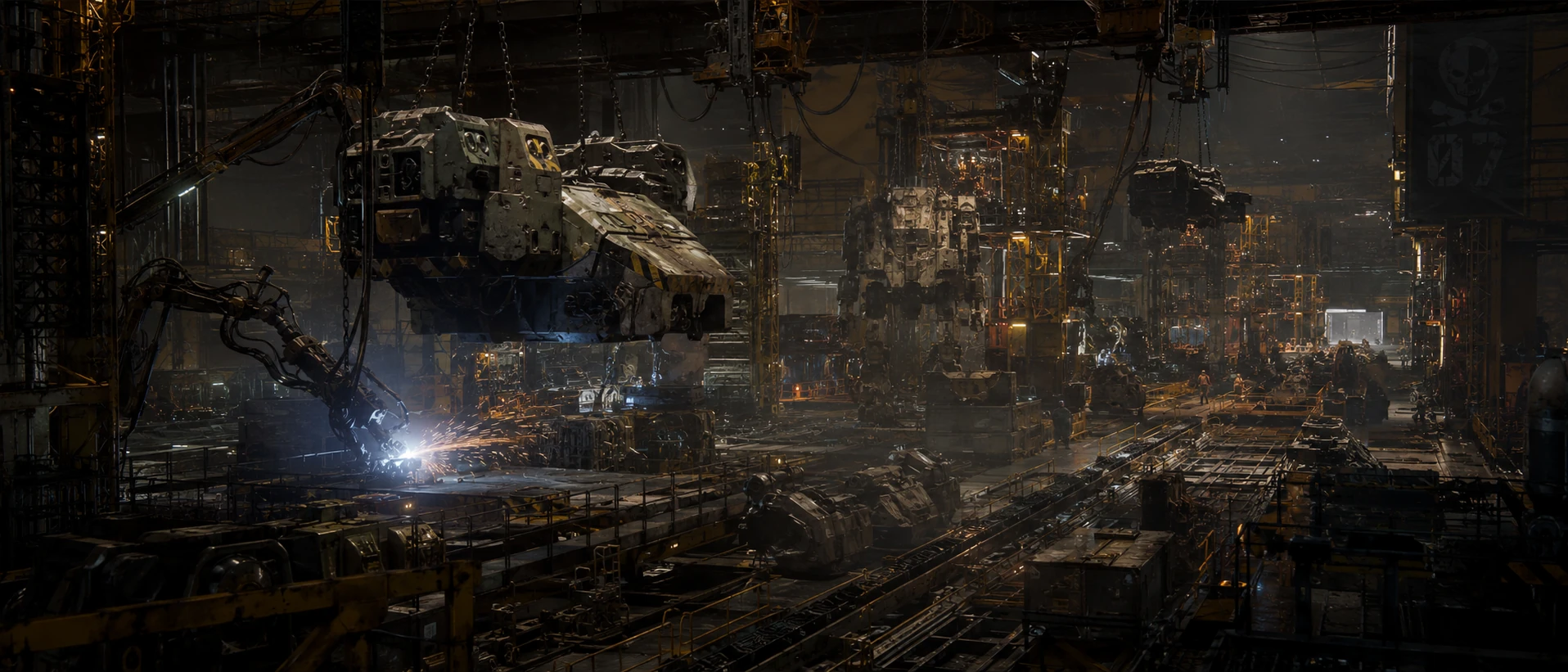
Manufacturing now uses fewer raw materials, mines cost less to establish and occupy less space, and developing empires receive stronger Commercial-income assistance. These changes make it easier to build an industrial economy and supply finished units through player production.
81% fewer manufacturing materials
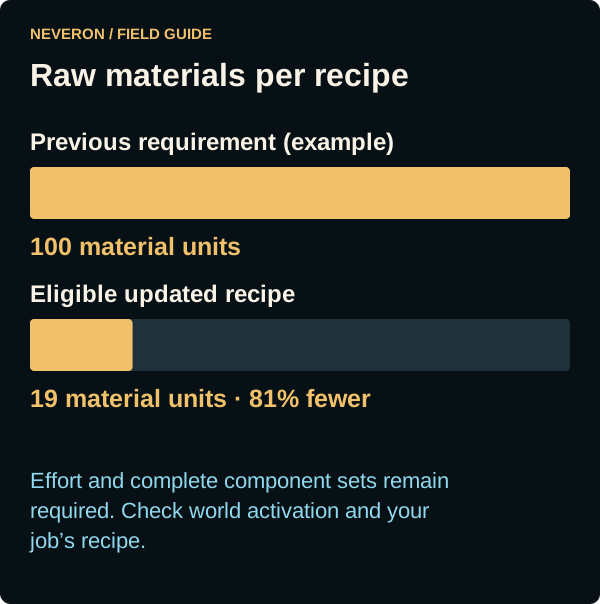
Eligible manufacturing recipes now require 19% of their previous raw materials. A requirement of 100 units becomes 19 units.
Units still require their complete set of engines, armour, weapons and other components. Manufacturing effort remains unchanged, so factories need fewer materials without automatically producing items faster.
Existing components remain usable. Lostech-dependent designs remain outside this balance update, with their existing restrictions preserved.
Resource values and manufacturing costs
The balance uses these resource reference values:
| Resource | Reference value |
|---|---|
| Structural Alloys | $90,000 |
| Advanced Alloys | $135,000 |
| Fusion Materials | $225,000 |
| Electronics Systems | $540,000 |
| Myomer Compounds | $900,000 |
These references support consistent manufacturing valuations. Actual market prices depend on available listings, and reference values do not guarantee a sale or payout.
Self-mined resources still carry value: using them in manufacturing means they are no longer available to sell or use elsewhere.
The manufacturing cost model includes complete material requirements and an illustrative 15% allowance for overhead:
| Unit | Manufacturing baseline |
|---|---|
| Locust LCT-1V | $10.071 million |
| Hunchback HBK-4G | $24.414 million |
| Atlas AS7-D | $48.553 million |
These are modeled valuations, not additional cash charges for manufacturing. Your actual costs depend on how you obtain materials and operate your industry.
Lower mine construction costs
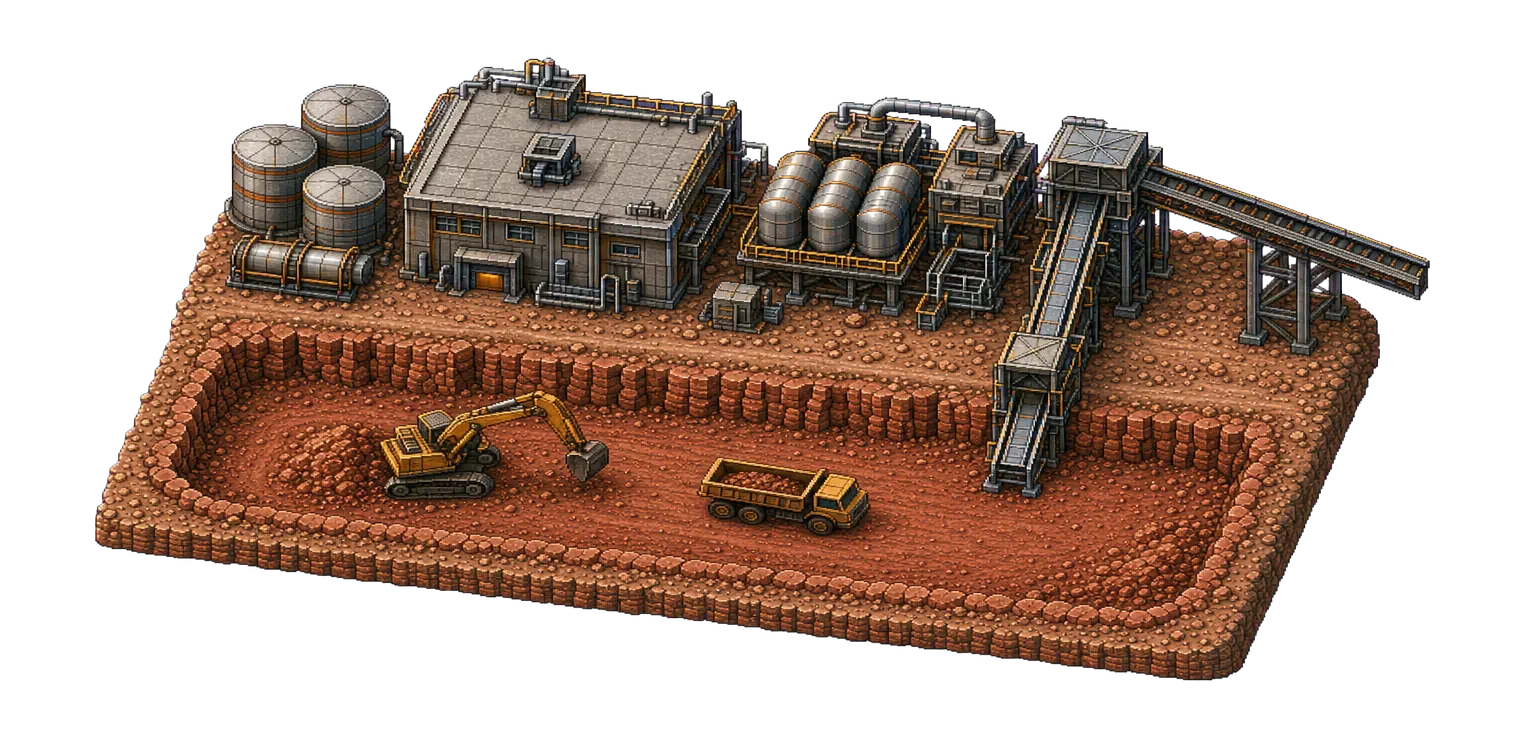
Ordinary mines now use these construction reference prices:
| Mine type | Reference construction price |
|---|---|
| Structural | $53 million |
| Advanced | $38 million |
| Fusion | $34 million |
| Electronics | $91 million |
| Myomer | $65 million |
Check the Buildings page for your actual construction quote. Mine upkeep remains calculated separately; lower construction costs do not automatically reduce running costs.
The reference prices are calibrated around roughly 90 real days of payback for a level-8 empire on representative exceptional deposits. Actual returns depend on deposits, operating costs, construction and site expenses, market prices and successful sales.
Mines occupy three spaces
Mines now occupy three spaces instead of five, including existing mines and pending construction. This releases up to two spaces per mine, subject to the zone's 500-space cap.
The limit of one mine of each resource type per zone remains, including mines under construction. Space that cannot be restored because a zone has reached its cap is not saved for later.
Existing mine owners receive no price-difference refund, compensation or upgrade credit. Existing ordinary rebate contracts remain separate.
Stronger income assistance
Empire Development Efficiency now provides up to a 1.50x multiplier on eligible Commercial income, increased from the previous maximum of 1.25x.
At maximum assistance, $1 million of eligible base Commercial income becomes $1.5 million instead of $1.25 million - a 20% increase over the previous assisted amount.
Assistance tapers as your empire develops. It does not apply as a blanket increase to total empire income, and eligibility depends on development rather than level alone.
Existing holdings and manufacturing progress
Your existing resources, components and finished units retain their quantities and ownership.
Started manufacturing keeps its committed recipe terms and progress. Materials already consumed, completed component stages and accumulated effort are preserved. New eligible work uses the reduced recipes.
The balance does not automatically revalue maintenance, rewards, salvage, Donation Point values or redemption payouts.
Market changes remain a separate phase
NPC pricing and supply behavior remain unchanged. Updated market guides, listing limits, buy orders and demand-based NPC replenishment remain part of a later market update.
The selected future player guides are $11.190 million for the Locust, $27.127 million for the Hunchback and $53.948 million for the Atlas. These figures are planning references for that later phase, not guaranteed current purchase prices.
For now, use the Manufacturing page to check your current requirements and the Buildings page to confirm mine construction costs. Budget for workforce, upkeep and production time alongside the reduced material requirements.